Explore IdeasThat Shape the Future.
Dive into expert insights, technology trends, innovative concepts, and deep-dive articles curated by Softuvo’s specialists.


How Does an E-commerce App Development Company in the USA Ensure Secure Payment Integration?
E-commerce growth has revolutionized shopping and business interaction. Mobile e-commerce apps are essential for digital commerce, creating a vital need for secure payment processing.
Online payment fraud continues to rise each year. According to industry reports, global e-commerce fraud losses are expected to exceed. For businesses, this means that a poorly designed payment system can lead to financial loss, customer distrust, and even legal risks.
This is why businesses increasingly rely on an e-commerce app development company in the USA to build secure and reliable payment systems. Professional developers don’t just integrate a payment gateway; they design a complete e-commerce payment system that protects both businesses and customers.
This guide details secure payment integration: how it works, the technologies involved, and how developers ensure strong payment security for e-commerce apps.
Why Secure Payment Integration Matters in E-commerce Apps
When a customer enters their card details or digital wallet information in an ecommerce app, they are trusting the platform with sensitive financial data. Even a single security breach can damage a brand’s reputation permanently.
Secure payment integration helps businesses:
Protect customer financial data
Prevent fraud and unauthorized transactions
Build trust and credibility
Comply with financial regulations
Reduce chargebacks and payment disputes
A professional e-commerce app development company understands that payment integration is not just about connecting to a gateway. It involves security architecture, encryption standards, compliance requirements, and seamless user experience.
Understanding E-Commerce Payment Systems
Before discussing security, it’s important to understand how an e-commerce payment system works.
In simple terms, the payment process involves several entities working together.
Key Components of an E-Commerce Payment System
Customer: The user who makes the purchase.
E-commerce App: The platform where the order is placed.
Payment Gateway: A technology that securely transmits payment information.
Payment Processor: Communicates with banks to authorize the transaction.
Customer’s Bank: Confirms whether the customer has sufficient funds.
Merchant’s Bank: Receives the payment.
This entire process usually happens in just a few seconds, but behind the scenes, it involves multiple security checks and encrypted communication channels.
What Is Payment Gateway Integration?
A payment gateway is a secure technology that allows businesses to accept online payments through credit cards, debit cards, UPI, digital wallets, and bank transfers.
Common examples include
Stripe
PayPal
Square
Authorize.Net
Razorpay (popular in Asia)
Developers integrate these services into apps using API payment gateway integration.
APIs (Application Programming Interfaces) allow the e-commerce app to communicate with the payment provider securely. Through APIs, the app can:
Send payment data
Verify transactions
Receive confirmation responses
Process refunds
Track transaction history
However, integrating a payment API is only the first step. Security layers must be implemented around it.
Key Security Measures Used by an E-commerce App

A professional e-commerce app development company in the USA follows multiple security practices to ensure safe payment integration.
Let’s explore the most important ones.
1. PCI DSS Compliance
The Payment Card Industry Data Security Standard (PCI DSS) is the global security standard for handling card payments.
Any e-commerce platform accepting card payments must comply with these guidelines.
PCI DSS ensures:
Secure storage of cardholder data
Encryption of payment information
Regular security monitoring
Strong access control systems
Experienced developers design e-commerce apps so that sensitive card data is never stored directly on the app servers.
Instead, the payment gateway securely processes it.
2. End-to-End Encryption
Encryption ensures that payment data cannot be read even if it is intercepted during transmission.
Most secure e-commerce apps use:
SSL/TLS encryption
AES-256 encryption standards
When customers enter their payment details, the information is immediately encrypted before being sent to the payment gateway.
This protects the data from hackers and cyber threats.
3. Tokenization for Secure Transactions
Tokenization replaces sensitive payment data with a random token.
For example:
Instead of storing a credit card number like
4532 8890 4567 9087
The system stores a token such as
7f3a91b2d8c4
Even if hackers access the database, they cannot retrieve the original card details. Tokenization is widely used in modern payment security for e-commerce apps.
4. Secure API Payment Gateway Integration
APIs are the bridge between the e-commerce app and payment providers. However, insecure APIs can expose the entire payment system.
Professional developers ensure secure API payment gateway integration through:
API authentication keys
OAuth authorization protocols
Rate limiting to prevent attacks
Secure API endpoints
Regular API monitoring
This ensures only authorized systems can communicate with the payment gateway.
5. Fraud Detection and AI Monitoring
Modern e-commerce platforms are using AI-powered fraud detection systems. These systems analyze user behavior in real time to identify suspicious activities.
For example, they detect:
Unusual purchase locations
Multiple failed payment attempts
Rapid transactions from different devices
Abnormal purchasing patterns
If suspicious activity is detected, the system may:
Block the transaction
Request additional verification
Trigger a fraud alert
This adds another layer of protection to the e-commerce payment system.
6. Multi-Factor Authentication (MFA)
Multi-factor authentication ensures that payments cannot be processed without additional verification.
Common methods include:
OTP verification
Biometric authentication
Two-step verification
3D Secure authentication
Many global payment providers now require 3D Secure protocols for card payments. This significantly reduces payment fraud.
7. Secure Backend Infrastructure
Even the most advanced payment gateway cannot protect an insecure backend.
A professional e-commerce app development company builds secure backend systems using:
Firewall protection
Secure cloud hosting
Regular vulnerability testing
Database encryption
Role-based access control
This ensures that sensitive payment data remains protected within the system.
Latest Trends in E-commerce Payment Security (2026)
The e-commerce payment landscape continues to evolve rapidly. Businesses must adopt modern security technologies to stay ahead of cyber threats.
Here are some key trends shaping secure payment integration.
1. Biometric Payment Authentication
Fingerprint and facial recognition are becoming common for payment verification.
Many mobile e-commerce apps now allow:
Face ID payments
Fingerprint verification
This improves both security and convenience.
2. AI-Powered Fraud Prevention
Artificial intelligence is now used to monitor millions of transactions in real time. AI models can detect patterns that human analysts might miss.
This helps businesses prevent fraud before it happens.
3. Blockchain-Based Payment Security
Blockchain technology is being explored for secure transaction verification.
Because blockchain transactions are decentralized and tamper-proof, they offer enhanced security for e-commerce payments.
4. One-Click Secure Payments
Customers expect fast checkout experiences. Secure one-click payments are becoming popular, especially with tokenized card storage.
This allows customers to pay instantly without entering details repeatedly.
Best Practices for Businesses Integrating E-Commerce Payments
If you are planning to launch an e-commerce platform, following these best practices can help ensure secure payment integration.
Choose trusted payment gateways: Always integrate globally trusted providers such as Stripe or PayPal.
Implement strong authentication: Use 3D Secure and OTP verification to reduce fraud.
Never store raw card data: Use tokenization and encrypted storage.
Perform regular security audits: Security vulnerabilities should be identified and fixed continuously.
Work with experienced developers: Professional development teams understand compliance, encryption standards, and secure architecture.
How Softuvo Builds Secure E-Commerce Payment Solutions
At Softuvo, the focus is not just on building e-commerce apps but on creating secure and scalable digital commerce platforms.
As an experienced e-commerce app development company in the USA, Softuvo helps startups, founders, and enterprises design powerful e-commerce systems with built-in payment security.
Softuvo’s development approach includes:
Secure API payment gateway integration
PCI-DSS compliant architectures
AI-based fraud detection systems
End-to-end encryption
Secure cloud infrastructure
Seamless checkout experiences
Softuvo combines advanced security with a user-friendly design, enabling businesses to confidently accept online payments and deliver smooth customer experiences.
Final ThoughtsSecure payment integration is one of the most critical components of any e-commerce application. Customers expect fast, smooth, and most importantly, safe transactions.
A reliable e-commerce app development company ensures that payment gateways are integrated with strong encryption, compliance standards, fraud protection systems, and secure infrastructure.
As e-commerce continues to grow, businesses that prioritize payment security for e-commerce apps will build stronger customer trust and long-term success.
With the right development partner and modern security technologies, businesses can create e-commerce platforms that are not only powerful but also completely secure.
Last updated: 3/6/2026
Read More
How Does Mobile Application Development for Healthcare Improve Patient Care?
The healthcare industry is undergoing a major digital transformation. Hospitals, clinics, and healthcare providers are increasingly using technology to improve patient care, reduce operational challenges, and make healthcare services more accessible. One of the most important innovations supporting this shift is mobile app development for healthcare.
Today, patients expect convenient and fast access to medical services. They want to schedule appointments online, consult doctors remotely, receive medication reminders, and track their health in real time. Mobile healthcare applications make all of these services possible through a simple and user-friendly interface.
For healthcare providers, mobile apps help improve patient communication, streamline operations, and offer more personalized care. Softuvo helps healthcare organizations build secure and scalable mobile solutions that improve both patient experience and clinical efficiency.
In this blog, we will explore how mobile app development is improving patient care, the technologies behind these applications, and why healthcare organizations are increasingly investing in digital healthcare platforms.
The Growing Importance of Mobile Apps in Healthcare
Mobile technology has become a part of everyday life. People rely on smartphones for communication, banking, education, and now even healthcare services. This shift has created new opportunities for healthcare providers to connect with patients beyond traditional hospital visits.
With mobile app development for healthcare, medical services can now be delivered directly to patients through their smartphones. These applications allow patients to:
Book doctor appointments instantly
Access their medical records
Receive medication reminders
Track vital health data
Communicate with healthcare professionals
Instead of waiting in long hospital queues, patients can manage many aspects of their healthcare from home. This improves convenience for patients while also helping hospitals manage their resources more efficiently.
Healthcare providers are also using mobile apps to improve treatment planning, monitor patient health, and reduce administrative workload.
Enhancing Patient Engagement with Digital Healthcare Solutions
Patient engagement plays a crucial role in successful treatment outcomes. When patients are actively involved in managing their health, they are more likely to follow treatment plans and maintain healthier lifestyles.
This is where digital patient engagement solutions make a significant impact.
Mobile healthcare apps can keep patients informed and engaged through features such as the following:
Appointment reminders
Medication alerts
Health tracking dashboards
Educational health content
Personalized health recommendations
For example, a patient managing diabetes can use a mobile app to track blood sugar levels and share the data with their doctor. Similarly, heart patients can monitor their heart rate and receive alerts if abnormal readings occur.
By giving patients better control over their health data, these digital solutions encourage proactive healthcare management and stronger patient-doctor relationships.
Remote Patient Monitoring for Better Care

Remote patient monitoring is another major advantage of healthcare mobile applications. Mobile apps integrated with wearable devices allow doctors to track patient health data in real time.
These apps can monitor various health indicators, including
Heart rate
Blood pressure
Blood glucose levels
Oxygen saturation
Physical activity levels
Doctors can analyze this data remotely and detect potential health issues before they become serious problems. This approach is especially helpful for patients with chronic conditions such as diabetes, hypertension, or heart disease.
Remote monitoring also reduces the need for frequent hospital visits, making healthcare more convenient for patients and reducing pressure on healthcare facilities.
Many healthcare providers are now working with experienced partners like Softuvo to build mobile platforms that support advanced patient monitoring and data sharing.
Streamlining Healthcare Operations with CRM Mobile Solutions
Healthcare providers handle large volumes of patient information every day. Managing appointments, medical records, billing, and follow-up communication can be complex without the right systems in place.
This is where healthcare CRM mobile solutions play an important role.
Healthcare CRM systems integrated with mobile apps help organizations manage patient relationships more effectively. These systems allow healthcare providers to:
Manage patient records in one centralized platform
Automate appointment scheduling and reminders
Track patient history and treatment plans
Improve communication between medical teams
Simplify billing and administrative processes
Doctors and healthcare staff can access patient data quickly through mobile devices, allowing them to make faster and more informed decisions.
By improving coordination between healthcare departments, CRM-based mobile solutions help healthcare organizations deliver more efficient and personalized care.
Telemedicine and Virtual Healthcare Services
Telemedicine has become one of the most widely adopted digital healthcare services in recent years. Mobile applications have made virtual healthcare consultations easier and more accessible for patients around the world.
Through healthcare apps, patients can consult doctors via:
Video calls
Secure messaging
Online appointment booking
Digital prescriptions
Telemedicine is particularly valuable for patients living in rural areas or those who cannot frequently visit healthcare facilities. It also helps doctors provide follow-up consultations without requiring patients to travel.
Mobile healthcare platforms make telemedicine convenient, efficient, and accessible. As a result, many healthcare providers are investing in mobile solutions developed by experienced healthcare app development companies to expand their digital healthcare services.
Ensuring Security with HIPAA-Compliant Mobile Apps
Healthcare applications manage highly sensitive patient data, including medical records, prescriptions, and personal information. Protecting this data is essential for maintaining patient trust and meeting regulatory requirements.
This is why healthcare apps must follow strict security standards and comply with regulations such as HIPAA.
HIPAA-compliant mobile apps ensure that patient information is stored and transmitted securely. These apps typically include security features such as
End-to-end data encryption
Secure login authentication
Role-based data access
Protected cloud storage
Regular security monitoring and updates
Healthcare organizations must work with experienced developers who understand these compliance requirements. A reliable healthcare app development company ensures that mobile healthcare platforms meet both security and regulatory standards.
Softuvo focuses on building secure healthcare applications that protect patient data while enabling smooth and reliable digital healthcare services.
The Future of Mobile Healthcare Applications

The future of healthcare will be increasingly driven by digital innovation. Mobile applications will continue to play a key role in improving healthcare accessibility, efficiency, and patient outcomes.
Emerging technologies such as artificial intelligence, wearable devices, and predictive analytics will make healthcare apps even more powerful.
In the coming years, healthcare apps may offer:
AI-based health insights and symptom analysis
Advanced remote patient monitoring
Personalized treatment recommendations
Integration with smart medical devices
Predictive health alerts
These innovations will help doctors make faster decisions and allow patients to manage their health more effectively.
Organizations investing in mobile app development for healthcare today are preparing for a more connected and technology-driven healthcare ecosystem.
AI-based health insights and symptom analysis
Advanced remote patient monitoring
Personalized treatment recommendations
Integration with smart medical devices
Predictive health alerts
Conclusion
Mobile applications are transforming how healthcare services are delivered. They improve accessibility, enhance patient engagement, and enable healthcare providers to deliver faster and more personalized care.
From digital patient engagement solutions and remote monitoring to healthcare CRM mobile solutions, mobile apps help healthcare organizations manage patient relationships and clinical operations more efficiently.
At the same time, security remains a top priority, which is why healthcare providers rely on HIPAA-compliant mobile apps to protect sensitive patient information.
As healthcare continues to evolve, investing in mobile technology is becoming essential for organizations that want to deliver better patient care and remain competitive in the digital era.
By partnering with Softuvo, healthcare providers can build secure, scalable, and user-friendly mobile solutions that improve patient outcomes and support the future of digital healthcare.

Cloud and Infrastructure: A Complete Guide for Businesses
Cloud is no longer a technology upgrade. It is a business decision.
Five years ago, cloud adoption was often driven by IT teams looking for flexibility. Today, the conversation happens at the board level. CEOs are asking whether their infrastructure can scale with growth. Founders are evaluating whether legacy systems are slowing innovation. Investors are examining whether cloud maturity reflects operational strength.
In this environment, understanding cloud computing services is no longer optional. It is essential.
This guide walks you through cloud and infrastructure from the ground up, clearly, strategically, and practically, so you can make informed decisions with confidence.
1. Understanding the Foundation: What Is Cloud Infrastructure?
At its core, infrastructure refers to the systems that power your digital operations:
Servers
Storage
Networking
Databases
Security systems
Traditionally, companies owned and maintained all of this inside physical data centers. This required large capital investment, constant hardware upgrades, dedicated IT teams, and complex disaster recovery systems.
Modern infrastructure works differently.
Through cloud computing services, businesses access computing power, storage, networking, and platforms over the internet. Instead of purchasing physical hardware, they use resources on demand.
A cloud services provider manages the cloud environment, freeing your team to concentrate on growth and innovation.
The result? Infrastructure becomes elastic, scalable, and operationally efficient. But the shift isn’t just technical; it changes how businesses grow.
2. How Cloud Creates Business Value
For leaders, the question isn’t “What is cloud?” It’s “Why does it matter for my growth strategy?”
Modern cloud computing services create value in several critical ways:
Scalability Without Delay
If demand spikes, you scale instantly. No hardware purchases. No weeks of provisioning.
Financial Flexibility
Instead of heavy capital expenditure, you operate on usage-based pricing. Infrastructure becomes operational expenditure aligned with real consumption.
Global Reach
Cloud platforms allow businesses to deploy services across regions, serving international customers with low latency.
Resilience and Continuity
Modern cloud environments significantly reduce the risk of downtime by replicating data across multiple zones and regions.
This is why cloud computing services are now considered foundational to digital transformation.
3. Deployment and Service Models: Choosing the Right Approach
Before moving forward, business leaders must understand cloud structure.
Deployment Models
Public Cloud: Shared infrastructure managed by a provider. Cost-effective and scalable.
Private Cloud: Dedicated infrastructure for a single organization. Greater control and compliance.
Hybrid Cloud: A mix of public and private, now the most common enterprise strategy. Hybrid allows sensitive data to remain controlled while leveraging the public cloud for scalability.
Service Models
IaaS (Infrastructure as a Service): Core computing, storage, and networking resources.
PaaS (Platform as a Service): Development environments for building and deploying applications.
SaaS (Software as a Service): Fully managed software delivered online.
Each model transfers different levels of responsibility from business to provider. The key is aligning the model with your internal capabilities and strategic goals.
4. Industry Trends Shaping Cloud Strategy

Executives need direction backed by evidence, not hype. Here are officially recognized trends influencing infrastructure decisions:
Hybrid and Multi-Cloud Are Becoming Standard
Hybrid and multi-cloud strategies are dominant infrastructure approaches. Organizations are distributing workloads across environments to reduce risk and increase flexibility.
Vendor lock-in is a significant risk; strategic flexibility, on the other hand, is a major asset.
AI Is Driving Cloud Demand
Cloud platforms now embed machine learning capabilities directly into infrastructure stacks. This enables AI-powered data analytics at scale, from predictive sales forecasting to operational automation.
McKinsey research indicates that companies integrating AI-powered data analytics into core operations significantly outperform peers in productivity and margin expansion.
Why it matters: Infrastructure is no longer just storage and compute; it is the engine of intelligent decision-making.
Cost Governance (FinOps) Is a Leadership Priority
As cloud adoption grows, uncontrolled spending becomes a risk. Industry reports show that many organizations waste significant portions of cloud budgets due to idle resources or poor governance.
FinOps practices, combining finance, operations, and engineering, are now considered essential for sustainable cloud growth.
Why it matters: The cloud saves money only when managed strategically.
Security Has Shifted to Shared Responsibility
Cloud security models require businesses and providers to collaborate. While providers secure infrastructure layers, organizations must manage access controls, configurations, and policies.
The majority of cloud breaches today result from misconfigurations, not provider failure.
Why it matters: Strategy must include governance, not just migration.
5. Real Business Challenges (And Strategic Responses)
Cloud is powerful, but not automatically successful. Let’s examine common executive-level challenges.
Challenge 1: Legacy Systems Limit Agility
Older applications often depend on a tightly coupled architecture, making migration complex.
Strategic Response:
Adopt phased migration. Begin with non-critical workloads. Gradually modernize applications into modular, cloud-native systems. This reduces risk and spreads investment across manageable stages.
Challenge 2: Data Exists in Silos
Sales, operations, marketing, and finance often store data in separate systems.
Strategic Response:
Build a unified cloud data platform and use AI-powered data analytics to generate real-time insights across departments. Integrated data improves forecasting accuracy and operational efficiency.
Challenge 3: Cloud Spend Escalates
Without tagging, governance, and monitoring, cloud costs grow unpredictably.
Strategic Response:
Implement structured governance policies. Monitor usage regularly. Use budgeting tools and performance dashboards to align cost with measurable outcomes.
Challenge 4: Internal Skill Gaps
Cloud architecture requires specialized expertise.
Strategic Response:
Invest in training or collaborate with an experienced cloud services provider who understands both technology and business objectives.
6. A Strategic Roadmap for Cloud Adoption
Cloud transformation should be intentional, not rushed.
Here’s a practical approach suitable for growth-focused organizations:
Phase 1: Assessment and Vision
Audit the current infrastructure
Identify pain points
Define measurable business outcomes
Phase 2: Pilot Implementation
Select one workload for migration
Test security frameworks
Establish cost baseline
Phase 3: Scale and Govern
Expand migration efforts
Implement governance and FinOps
Introduce AI-driven analytics capabilities
Phase 4: Optimize and Innovate
Refactor applications for efficiency
Integrate automation
Explore advanced models such as serverless or edge computing
This staged method reduces operational risk while building internal maturity.
7. Choosing the Right Cloud Services Provider
Selecting a cloud services provider should be a strategic evaluation, not just a procurement decision.
Leaders should assess:
Industry expertise
Security certifications
Scalability track record
Cost transparency
Support and advisory capability
Ability to integrate AI-powered data analytics
A true partner doesn’t just migrate infrastructure; they align it with your growth roadmap.
8. From Infrastructure to Competitive Advantage
The businesses leading their industries today treat infrastructure as a strategic asset. Cloud is not about replacing servers. It is about enabling speed, intelligence, resilience, and innovation.
When infrastructure scales with your ambition, growth stops being limited by technology. Instead, technology becomes the driver of expansion. And when guided by the right cloud services provider, transformation becomes structured rather than risky.
For founders and market leaders, the question is no longer whether cloud matters. The real question is, is your infrastructure built for where your business wants to go next?
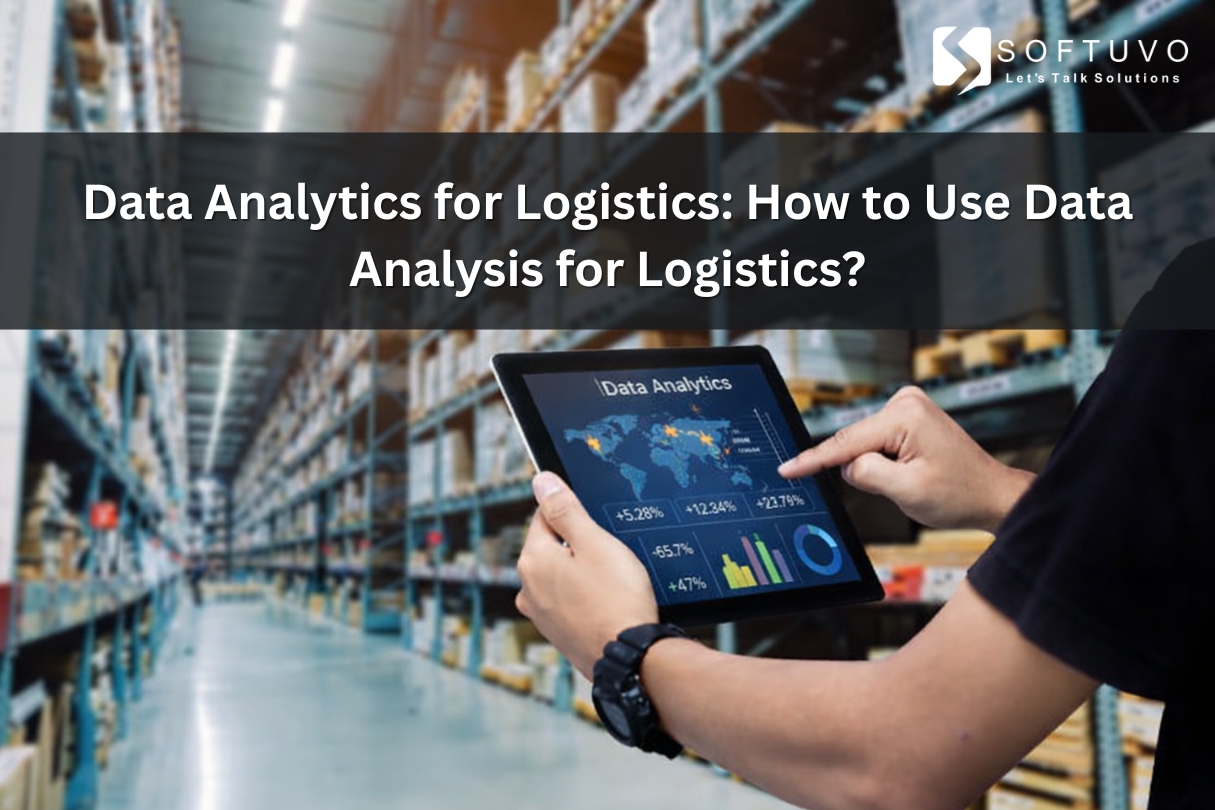
Data Analytics for Logistics: How to Use Data Analysis for Logistics?
At 6:40 AM, a fleet manager notices something unusual.
Three trucks, three different cities, all running late. And it hasn’t even started raining yet.
By noon, customer calls begin. By evening, penalties are applied. At first, it appears to be bad luck.
However, when the operations team reviews their historical data later that week, they discover something uncomfortable: this delay pattern has been repeating every Tuesday for the past two months. Same route. Same traffic surge. Same delivery window.
The signs were always there.
They just never connected the dots.
This is exactly where data analytics for logistics changes everything, not by complicating operations, but by revealing patterns that humans alone can’t consistently detect.
The Real Challenge in Logistics Isn’t Movement, But It’s Visibility
Most logistics businesses already generate enormous amounts of data every day:
GPS tracking from vehicles
Warehouse barcode scans
Dispatch and delivery timestamps
Fuel consumption logs
Customer order histories
Maintenance records
The problem isn’t a lack of data. The problem is fragmentation.
Often, this critical information is spread across various organizational systems, each managed by a different team. For instance, fleet operations might use one specific tool, warehousing a separate one, and the finance department a third for tracking associated costs.
When logistics supply chain management runs on disconnected systems, decisions become reactive. Leaders respond to problems instead of preventing them.
By unifying these separate streams, data analytics establishes a single, reliable source of operational truth. This enables managers to gain a deep understanding, not just of what occurred, but also of why it happened and what the future is likely to hold.
That shift from hindsight to foresight is where the real value lies.
Step 1: Turn Scattered Information into One Clear Operational View
Before talking about AI or forecasting, the foundation must be solid.
The first practical step in using data analysis for logistics is unifying your data.
If fleet performance, warehouse metrics, and cost reports live in separate dashboards, leadership cannot act confidently. But when data flows into a centralized intelligence platform, something powerful happens:
Delivery delays are connected to route congestion trends
High fuel costs are linked to specific driving behaviors
Frequent returns connect to handling practices or packaging methods
Suddenly, operations become measurable instead of mysterious.
Clarity reduces stress. And clarity improves control.
Step 2: Stop Guessing Demand, Start Forecasting It
Many logistics teams still rely on experience-based forecasting.
“Last year around this time, orders increased.” "The festive season usually boosts volume.” Experience is valuable, but it isn’t precise.
This is where predictive analytics in logistics becomes essential. Instead of estimating demand, companies analyze:
Multi-year order patterns
Seasonal demand shifts
Regional buying behavior
Promotion-driven spikes
Economic trends
Predictive models transform historical data into forward-looking insights.
The result?
No unnecessary overstocking
No emergency stockouts
Better fleet allocation
Smarter workforce planning
Planning becomes structured rather than emotional. And in logistics, planning accuracy directly affects profitability.
Step 3: Route Optimization That Actually Saves Money
Every logistics company uses GPS. But basic navigation only finds the shortest route. Shortest doesn’t always mean smartest.
Advanced data analytics for logistics considers:
Time-of-day traffic trends
Historical congestion patterns
Vehicle load efficiency
Fuel consumption behavior
Delivery priority commitments
For example, a slightly longer highway route may consume less fuel and avoid heavy city congestion, resulting in faster overall delivery.
Analytics systems can detect such patterns instantly.
When applied properly, route optimization:
Reduces empty miles
Improves on-time delivery rates
Cuts fuel expenses
Extends vehicle life
And importantly, it does all of this without increasing fleet size. That’s operational maturity, achieving more with the same resources.
Step 4: Use Warehouse Data to Reduce Human Effort

Warehouses often hide inefficiencies that go unnoticed for years.
Workers may walk several kilometers daily while picking orders. Certain aisles may create repeated congestion. High-demand items might be stored too far from dispatch zones.
Heatmap-based warehouse analytics can reveal:
Frequently accessed product zones
Bottleneck points in picking routes
Inefficient storage layouts
Labor-intensive processes
Once these patterns become visible, layout adjustments can significantly improve productivity.
Better placement means fewer steps. Fewer steps mean faster fulfillment. Faster fulfillment means happier customers.
This is where logistics supply chain management evolves from manual supervision to intelligent optimization.
Step 5: Evaluate Carriers Using Data, Not Assumptions
Carrier relationships are often built on trust and a long history. But what if performance data shows something unexpected?
Carrier A delivers 8% faster
Carrier B reports 15% higher damage claims
Carrier C struggles with rural routes
With analytics, performance becomes transparent.
Instead of relying on perception, companies negotiate contracts using measurable metrics like
On-time delivery rate
Cost per shipment
Damage frequency
Customer feedback
This creates stronger partnerships based on accountability. And accountability improves long-term reliability.
From Reports to Real-Time Action
Traditional reporting systems provide insights after problems occur. Modern predictive analytics in logistics goes further; it suggests action.
Instead of simply flagging a risk, systems can recommend, "Based on forecasted rainfall, route congestion data, and current fleet capacity, reroute shipments through Corridor B to avoid a 3-hour delay.”
This moves logistics from reactive management to intelligent execution.
It doesn’t remove human decision-making. It strengthens it.
What Businesses Gain in Real Terms
When data analytics for logistics is implemented correctly, the impact is measurable.
Organizations often experience:
Lower transportation costs
Reduced inventory waste
Fewer delivery delays
Improved customer satisfaction
Better compliance with sustainability goals
Reduced operational stress for managers
Perhaps the biggest benefit is confidence. When leaders have data-backed insights, decisions feel strategic instead of risky.
That confidence influences the entire organization.
Why This Matters in 2026
Logistics is no longer just about moving goods.
Margins are tightening. Customers expect real-time tracking. Sustainability reporting is becoming mandatory across global markets. Competition is intense.
Companies relying only on experience may survive. Companies combining experience with analytics will lead.
The future belongs to organizations that treat data as a strategic asset, not just a byproduct of operations.
Importantly, data analytics does not replace traditional logistics knowledge. It enhances it.
The discipline and coordination that built the logistics industry remain essential. Analytics simply strengthens those foundations.
Final Thought
The logistics industry has always valued precision and reliability. Today, precision comes from insight. And insight comes from thoughtfully applied data analytics for logistics.
You don’t need to transform everything overnight. Start small. Unify your data. Measure consistently. Forecast intelligently. Optimize step by step.
The companies that master their data won’t just move goods efficiently. They’ll move forward with clarity, control, and confidence.
If you're ready to build a smarter logistics ecosystem backed by real analytics and intelligent automation, it may be time to explore how the right technology partner can support your journey.
FAQs
1. What is data analytics for logistics?
Data analytics for logistics involves collecting and analyzing operational data, including shipments, routes, warehouse activity, and fuel usage, to improve efficiency, reduce costs, and enhance decision-making.
2. How is predictive analytics different from regular analytics?
Regular analytics focuses on past and present performance. Predictive analytics in logistics uses historical data and machine learning models to forecast future outcomes like demand increases, route delays, or maintenance needs.
3. How does data analytics improve logistics supply chain management?
It increases visibility across procurement, storage, transportation, and delivery. This helps reduce bottlenecks, improve inventory control, and enhance coordination between partners.
4. Can small or mid-sized logistics companies use data analytics?
Yes. Even basic dashboards, route tracking tools, and forecasting systems can deliver measurable improvements without heavy infrastructure investment.
5. What types of data are most important in logistics analytics?
Common data sources include GPS tracking, delivery timestamps, order histories, fuel records, warehouse scans, maintenance logs, and customer feedback.
How Do Angular Development Services Ensure Security and Performance for Canadian Businesses?
Canada’s digital economy is expanding rapidly across sectors like fintech, healthcare, logistics, and retail. With strict regulatory requirements such as PIPEDA, increasing cyber threats, and rising user expectations for performance, Canadian organizations cannot afford poorly engineered web applications.
Choosing Angular is not just a frontend decision, but it’s an architectural decision.
When implemented correctly, Angular provides the structure, tooling, and security foundations required for enterprise systems. When implemented poorly, it can become heavy, inefficient, and difficult to scale.
That’s where expert Angular development services make the difference.
Why Angular Is a Strategic Fit for Canadian Enterprises
For Canadian businesses, the value lies in three core advantages:
Opinionated architecture
Built-in security model
Enterprise-ready tooling
Unlike lightweight UI libraries, Angular is a full framework. It enforces modular design, dependency injection, strict typing via TypeScript, and CLI-driven project structure. This consistency matters when scaling applications across multiple teams.
For regulated industries in Canada, that structure reduces risk.
How Angular Ensures Application-Level Security
Security is not an afterthought; it must be embedded at the framework and architecture level.
1. Built-in XSS Protection Through Contextual Escaping
Angular automatically sanitizes:
HTML
URLs
Styles
Resource URLs
This protects against Cross-Site Scripting (XSS) without relying on third-party libraries. The framework treats template bindings as untrusted by default and escapes them accordingly.
In high-risk applications, such as financial dashboards or healthcare portals, this default protection significantly reduces attack surfaces.
Professional Angular development Canada teams go further by:
Enforcing strict template type checking
Avoiding unsafe bypassSecurityTrust APIs unless reviewed
Conducting security linting with ESLint + Angular security rules
2. Secure API Communication Architecture
In enterprise Angular apps, API communication is centralized using:
HttpClient
HTTP Interceptors
JWT-based authentication
OAuth2 / OpenID Connect integrations
An interceptor can:
Automatically attach access tokens
Refresh expired tokens
Handle 401 responses globally
Log suspicious API activity
For Canadian fintech integrations (e.g., payment gateways or banking APIs), this pattern ensures encrypted, authenticated communication over HTTPS with proper token lifecycle management.
Softuvo’s approach includes:
Token storage best practices (avoiding localStorage when possible)
Secure cookie handling
CSP (Content Security Policy) enforcement
Regular dependency vulnerability scans
3. Route Guards and Role-Based Access Control (RBAC)
Angular Route Guards allow granular authorization:
CanActivate
CanLoad
CanActivateChild
In enterprise dashboards, this enables:
Admin-only reporting modules
Restricted HR panels
Tier-based feature access
Combined with backend role validation, this creates a double-layered authorization model, critical for compliance-driven industries.
Performance Optimization for Scalable Angular Applications
Performance directly impacts conversion, retention, and operational efficiency.
Enterprise Angular apps must be engineered for performance from day one.
1. Ahead-of-Time (AOT) Compilation
Angular CLI enables AOT by default in production builds.
Benefits:
Smaller bundle size
Faster rendering
Early template error detection
Improved security (no runtime template compilation)
This reduces initial load time, which is particularly important for users across Canada accessing apps over varied network speeds.
2. Lazy Loading with Feature Modules
A common architectural mistake is bundling the entire app in the initial load.
Instead, scalable Angular applications use:
Feature modules
Route-based lazy loading
Preloading strategies
Example:
A logistics dashboard may load:
Core dashboard on entry
Analytics module only when requested
Fleet tracking module separately
This drastically reduces Time to Interactive (TTI).
3. Change Detection Optimization (OnPush Strategy)
Angular’s default change detection checks every component on each event cycle.
In data-heavy applications, this creates unnecessary re-renders.
Using:
ChangeDetectionStrategy.OnPush
Developers restrict updates to:
Input reference changes
Observable emissions
Manual triggers
Combined with RxJS state management patterns, this reduces CPU usage and improves UI responsiveness, which is critical in real-time systems.
4. Ivy Rendering Engine and Bundle Optimization
Angular’s Ivy engine improves:
Tree shaking
Smaller bundle sizes
Faster rebuild times
Better debugging support
Production builds are further optimized using:
Differential loading
Build optimizer
Source-map exclusion
Gzip/Brotli compression
Softuvo enhances this with:
Core Web Vitals auditing
Lighthouse performance benchmarking
Bundle analysis using source-map-explorer
Real-World Use Cases
Healthcare Portal
Requirements:
Secure patient records
High concurrency handling
Regulatory compliance
Architecture:
Lazy-loaded consultation and billing modules
JWT-based auth with refresh token flow
Role-based access for doctors, patients, and admins
OnPush strategy for large patient lists
API throttling and caching
Result:
Secure, compliant, and performant patient portal infrastructure.
Logistics & Fleet Tracking
Requirements:
Real-time GPS updates
Live dashboard updates
High-frequency API polling
Solution:
RxJS WebSocket integration
BehaviorSubject-based state management
Smart change detection
Dynamic map rendering optimization
This ensures live updates without UI freezes or memory leaks.
Softuvo Approach to Angular Development Services
While numerous vendors develop Angular applications, long-term scalability and compliance are considerations that few engineers prioritize.
Softuvo’s Angular development services focus on:
1. Architecture-First Development
We design modular, scalable systems using:
Feature-based architecture
Shared core modules
Clean separation of concerns
2. Compliance-Aligned Engineering
We build systems aligned with:
Data protection requirements
Secure authentication standards
Infrastructure hardening best practices
3. Performance Engineering
Optimization isn't just about development.
Change detection tuning
Lazy loading implementation
Advanced caching strategies
CDN configuration support
4. Lifecycle Support
We provide:
Version upgrades
Security patch management
Continuous performance monitoring
Ongoing feature expansion
Why Angular Development Demands Expertise
Angular is powerful, but only when used correctly.
Poor implementation leads to:
Bloated bundles
Slow UI
Hard-to-maintain codebases
Security vulnerabilities
Expert-level Angular development services transform Angular into:
A secure enterprise platform
A scalable frontend architecture
A long-term digital asset
Conclusion
For Canadian enterprises, digital platforms must meet three standards:
Secure
Performant
Scalable
Angular provides the framework.
Engineering expertise delivers the results.
By partnering with an experienced Angular development company in Canada, organizations gain not just developers but architectural partners capable of building high-performance, regulation-ready, scalable Angular applications.
If your organization is planning a new build, migration, or performance overhaul, now is the time to invest in engineering done right.
FAQs
1. Is Angular suitable for small startups in Canada?
Absolutely. While Angular is famous for enterprise apps, its modularity makes it great for startups that plan to scale quickly. You can start small and add features as you grow.
2. How does Angular compare to React for security?
Both are excellent, but Angular has more "out-of-the-box" security features like built-in XSS protection, whereas React often requires third-party libraries for similar functionality.
3. Does Softuvo provide ongoing maintenance for Angular apps?
Yes, our Angular development services include end-to-end support, from initial strategy and design to post-launch maintenance and version upgrades.
Can AI-Powered Django E-commerce Platforms Transform Global Retail in 2026?
The global retail industry is entering a new era.
According to Statista, global eCommerce revenue is projected to reach approximately $3.89 trillion in 2026, reflecting continued digital expansion across markets. At the same time, McKinsey reports that companies using AI-driven personalization see revenue increases of 5–15% and marketing efficiency improvements of 10–30%.
The message is clear: retail is no longer just digital. It is intelligent.
For businesses aiming to build scalable, secure, and high-performance e-commerce platforms, the combination of Django web development and artificial intelligence is becoming a strategic advantage, not just a technical choice.
At Softuvo, we work with growing and enterprise-level businesses that are facing the same reality: legacy systems are slowing them down, personalization efforts are limited, and global expansion feels complex and risky.
The solution? Intelligent, AI-powered e-commerce built on Django.
Let’s explore why.
The Retail Reality in 2026

Retail today is facing five major pressures:
1. Customers Expect Hyper-Personalization
Modern customers expect platforms to understand them. Generic recommendations are no longer enough.
2. Supply Chains Are Unpredictable
Geopolitical tensions, climate disruptions, and fluctuating demand create uncertainty. Poor demand forecasting leads to overstocking or stockouts, both of which are costly.
3. Data Is Growing Faster Than Insight
Retailers collect massive amounts of data, but without AI, it remains unused. Decision-makers often lack actionable intelligence.
4. Global Expansion Is Complicated
Entering new markets requires localization, compliance with regulations like GDPR and LGPD, and understanding cultural buying behavior.
5. Online and Offline Retail Are Merging
The “phygital” experience, blending physical and digital, requires seamless integration between systems.
Traditional online store development approaches struggle to handle this complexity. Retailers now need platforms designed for intelligence and scale.
Why Django Development Is the Backbone of High-Performance E-commerce
Before adding AI, you need a strong foundation.
Django, a Python-based web framework, has powered platforms at a massive scale, including companies like Instagram and Pinterest.
Here’s why Django is ideal for modern Django e-commerce development:
1. Native AI Compatibility
Python is the dominant language in artificial intelligence and machine learning. Because Django is built on Python, integrating AI models is far more seamless compared to other frameworks.
This reduces:
Development time
Integration complexity
Long-term maintenance costs
For AI-powered e-commerce, this compatibility is critical.
2. Scalability for Global Traffic
Django’s architecture supports high traffic volumes, large product catalogs, and millions of transactions, making it ideal for high-performance e-commerce environments.
3. Security at Enterprise Level
Retail platforms handle sensitive customer and payment data. Django includes built-in protections against:
SQL injection
Cross-site scripting (XSS)
Cross-site request forgery (CSRF)
For global operations, where compliance matters, this security layer is essential.
4. Faster Development Cycles
The clean architecture and reusable components of Django enable businesses to achieve a competitive advantage by allowing for faster launches and rapid iteration.
How AI-Powered E-commerce Transforms Real Retail Challenges

Now let’s look at the practical impact.
1. Intelligent Personalization
AI is no longer about “Customers who bought this also bought…”
It’s about predictive behavior.
For example, Amazon attributes up to 35% of its revenue to its recommendation engine.
With AI integrated into Django e-commerce platforms, retailers can:
Predict customer preferences based on browsing behavior
Adjust homepage layouts dynamically
Offer personalized promotions
Use AI-driven chatbots for contextual assistance
This increases conversion rates and customer loyalty.
2. Predictive Demand Forecasting
AI analyzes:
Historical sales
Seasonal patterns
Weather data
Social media trends
Market signals
Imagine knowing how many winter jackets you need in Berlin versus Singapore months in advance. That’s operational intelligence.
3. Dynamic Pricing Optimization
Retail leaders like Zara use real-time data to adjust production and pricing strategies rapidly.
AI-powered Django systems can:
Adjust prices based on demand
Monitor competitor pricing
Optimize margins automatically
Run region-specific pricing strategies
This ensures profitability without losing competitiveness.
4. Fraud Detection and Risk Management
AI models can detect suspicious transaction patterns in real time, reducing risk and protecting revenue, especially in global markets.
5. AI-Assisted Content and Search
AI can generate optimized product descriptions, meta tags, and multilingual content for global markets.
Natural Language Processing (NLP) improves search results by understanding intent, not just keywords.
Instead of searching “blue dress,” customers searching “wedding outfit for beach” get contextual, intelligent results.
Real-World Scenario: Mid-Sized Fashion Brand Expanding Globally
Consider a fashion retailer expanding into Europe and Asia.
Without AI and robust Django development, they face:
Manual inventory forecasting
Region-specific content management
Static pricing models
Slow website performance
With an AI-powered Django platform:
Demand forecasting becomes automated
Pricing adjusts per region
Content localizes dynamically
Customer service chatbots support multiple languages
The result?
Higher conversion rates, lower operational costs, and faster expansion.
Implementation Roadmap: How Businesses Can Transition
For decision-makers wondering, “Where do we start? ”, here’s a practical roadmap:
Step 1: Audit Existing Systems
Evaluate scalability, performance bottlenecks, and AI readiness.
Step 2: Migrate to a Scalable Django Architecture
Build a modular, API-first backend for flexibility.
Step 3: Integrate AI Modules Gradually
Start with:
Recommendation engines
Demand forecasting
Intelligent search
Step 4: Optimize and Scale
Implement continuous AI model refinement alongside the utilization of performance monitoring tools.
Transition doesn’t need to happen overnight. Strategic implementation ensures ROI without disruption.
Why Softuvo Is Positioned to Lead This Transformation
At Softuvo, we combine:
Expertise in Django Development
Deep experience in Django e-commerce development
Strong AI/ML capabilities
Scalable online store development strategies
We don’t just build websites.
We engineer intelligent retail ecosystems designed for high-performance e-commerce and global growth.
Our approach focuses on:
Business alignment
Scalable architecture
Secure implementation
AI-driven optimization
The result is not just a digital store but a competitive advantage.
Final Thoughts
AI-powered e-commerce is not a trend.
It is becoming the standard.
By 2026, retailers that fail to adopt intelligent systems risk losing relevance to faster, smarter competitors.
Django provides a secure and scalable foundation. AI provides the intelligence.
Together, they create retail platforms that predict demand, personalize experiences, optimize operations, and scale globally.
The real question isn’t whether AI-powered Django platforms can transform global retail.
The real question is, will your business lead the transformation or react to it?
FAQs
1. Why is Django a strong choice for AI-powered e-commerce?
Django is built on Python, which makes AI integration seamless. It also offers strong security, scalability, and performance for high-performance e-commerce platforms.
2. How does AI improve online store performance?
AI boosts operational efficiency and increases conversions by strengthening fraud detection, optimizing pricing, improving demand forecasting, and enhancing personalization.
3. Can Django e-commerce development support global expansion?
Yes. Django supports multi-language, multi-currency, scalable infrastructure, and secure integrations, making it ideal for global online store development.
4. Is AI-powered e-commerce only for large enterprises?
No. Mid-sized businesses can implement AI gradually, starting with recommendation engines, intelligent search, or demand forecasting.
5. How long does it take to implement an AI-powered Django platform?
Depending on complexity, implementation can take 3–6 months for core systems, with AI features added in phases.
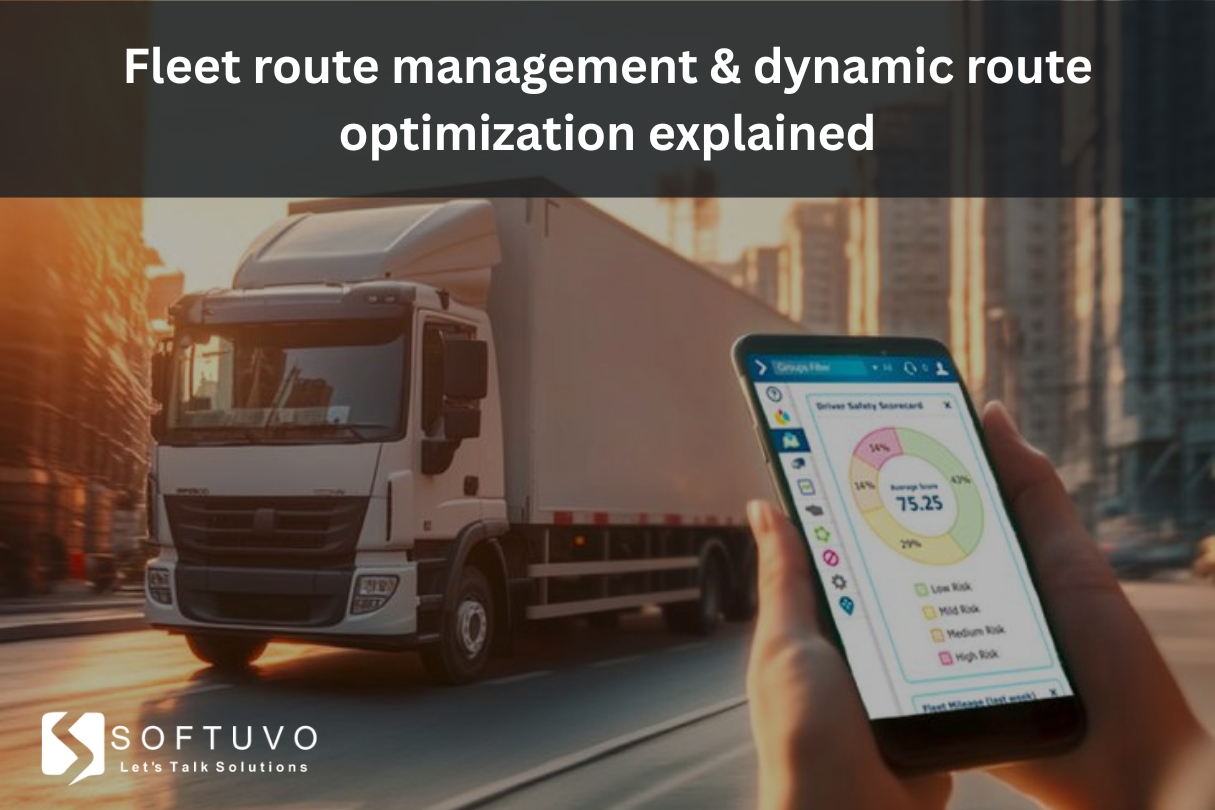
Fleet Route Management & Dynamic Route Optimization Explained
In today’s logistics landscape, speed alone is not enough. Precision, adaptability, and real-time intelligence now define success. For companies managing deliveries across cities, states, or countries, fleet and route management has evolved from a basic operational task into a strategic growth driver.
As we move deeper into 2026, businesses are no longer asking, “What’s the shortest route?” Instead, they are asking, “What’s the smartest route right now?”
With rising fuel prices, stricter emission regulations, customer expectations for real-time tracking, and the rapid expansion of e-commerce, investing in modern fleet management software is no longer optional; it’s essential.
Let’s explore how logistics fleet optimization, AI-driven route optimization, and GPS fleet tracking are reshaping the industry.
The Growing Importance of Fleet and Route Management
The global fleet management market continues to expand rapidly. Industry reports project the market to grow from approximately $23.8 billion in 2025 to over $27 billion in 2026, maintaining a CAGR of around 14–15%.
This growth is not driven by more vehicles alone; it reflects a major shift toward intelligent systems that can analyze, predict, and optimize operations in real time.
At its core, fleet and route management involves:
Monitoring vehicle performance
Planning and optimizing delivery routes
Tracking driver behavior
Managing fuel efficiency
Ensuring regulatory compliance
In 2026, data, automation, and artificial intelligence will be the driving forces behind this process.
Why Traditional Route Planning No Longer Works
In the past, route planning was a static process. Dispatchers would print schedules each morning, drivers adhered to fixed routes, and any necessary changes had to be managed by hand.
That model simply cannot survive in today’s environment.
Consider these real-world challenges:
Sudden traffic congestion
Road closures
Extreme weather events
Last-minute delivery changes
Tight customer time windows
A fixed plan cannot adapt to dynamic realities. This is where advanced fleet management software bridges the gap between planning and execution.
The Real Cost of Poor Logistics Visibility
Without an integrated system, fleet operations suffer in three major areas:
1. Fuel Inefficiency
Fuel represents one of the highest operational costs for logistics companies. Studies show that inefficient routing, idling, and empty return trips (deadhead miles) can consume up to 30% of transportation budgets.
Even small route inefficiencies multiply quickly across large fleets.
2. Data Silos
Vehicle diagnostics, GPS tracking, maintenance logs, and driver performance data often exist in separate systems. When data is disconnected:
Decisions are slower
Maintenance is reactive instead of predictive
Visibility is limited
Modern logistics fleet optimization eliminates these silos by centralizing data.
3. Customer Dissatisfaction
Research on last-mile delivery reveals that inaccurate ETAs are among the top reasons for customer complaints.
Today’s customers expect “Uber-like” visibility. If they cannot track their shipment in real time, trust drops immediately.
AI-Driven Route Optimization

The most powerful innovation in fleet and route management today is AI-driven route optimization.
Unlike traditional GPS systems that simply calculate the shortest distance, AI evaluates thousands of variables simultaneously.
What AI Considers:
Historical traffic patterns
Real-time congestion data
Weather forecasts
Delivery priority windows
Vehicle weight and size restrictions
Fuel consumption patterns
Driver availability and legal driving hours
This intelligence allows the system to constantly adjust routes throughout the day, not just once in the morning.
Measurable Impact of AI in Fleet Operations
Companies implementing AI-driven route optimization have reported impressive results:
Up to 35% reduction in total transportation costs
20–30% decrease in fuel consumption
40% reduction in vehicle downtime through predictive maintenance
Improved on-time delivery rates exceeding 95%
These are not minor improvements; they have a direct impact on profitability.
AI transforms logistics from a cost center into a competitive advantage.
The Strategic Role of GPS Fleet Tracking
If AI is the brain of modern fleet systems, GPS fleet tracking is the eyes.
But GPS today is far more advanced than simply showing a vehicle’s location.
Modern GPS-enabled fleet management software provides:
Real-Time Visibility
Dispatchers can monitor every vehicle’s position and status instantly.
Driver Behavior Insights
Harsh braking, rapid acceleration, and excessive idling can be tracked and corrected, improving both safety and fuel efficiency.
Geofencing
Automated alerts trigger when vehicles enter or exit specific zones. Warehouses can prepare loading docks as trucks approach, minimizing delays.
Dynamic Reassignment
If one driver is delayed, the system can automatically assign deliveries to a nearby vehicle, preventing missed deadlines.
This real-time adaptability is central to effective logistics fleet optimization.
Real-World Scenario: Static vs. Dynamic Routing
Let’s imagine a regional distributor operating 50 refrigerated trucks.
Static System
A bridge unexpectedly closes.
A truck gets stuck in traffic for two hours.
Perishable goods risk spoilage.
The driver exceeds legal driving hours.
Multiple deliveries are delayed.
Losses multiply quickly.
AI-Driven Dynamic System
The system detects the closure in advance.
An alternative route is instantly calculated.
Two deliveries are reassigned to a nearby truck.
Delivery windows are maintained.
Fuel waste is minimized.
Result:
Zero spoilage
On-time delivery maintained
Operational costs reduced
This is the real power of modern fleet and route management.
2026 Trends Shaping Logistics Fleet Optimization
Several emerging trends are making advanced systems mandatory rather than optional.
1. Electrification of Fleets
As companies transition to electric vehicles (EVs), route planning becomes more complex. AI must factor in:
Battery range
Charging station locations
Charging time requirements
Traditional route tools are not built for this level of complexity.
2. Regulatory Compliance
Governments are enforcing stricter regulations regarding:
Emissions tracking
Electronic logging devices (ELDs)
Driver hour limits
Integrated fleet management software ensures automatic compliance, reducing legal risks.
3. The “Amazon Effect.”
Customers now expect:
Real-time tracking
Accurate delivery windows
Instant notifications
Without GPS fleet tracking and AI-powered updates, meeting these expectations is nearly impossible.
The Environmental Advantage
Optimized routing does more than reduce costs; it lowers carbon emissions.
By reducing idle time, shortening travel distances, and improving fuel efficiency, companies significantly cut their environmental footprint.
In an era where sustainability is becoming a board-level priority, intelligent fleet and route management supports ESG goals while protecting margins.
Building a Unified Fleet Intelligence System
The most effective logistics operations rely on a unified system that integrates:
GPS fleet tracking
Telematics data
IoT vehicle sensors
Predictive maintenance analytics
AI-driven route optimization
Instead of juggling multiple dashboards, decision-makers get a single source of truth.
At Softuvo, the focus is not just on building software; it is on building intelligent systems to meet business needs. By combining real-time tracking with AI analytics, organizations gain full operational visibility across every asset.
Businesses implementing integrated solutions commonly achieve the following:
Up to 30% reduction in fuel and idle costs
Faster delivery turnaround times
Improved asset utilization
Increased driver safety
Stronger customer retention
Technology should empower operations, not complicate them.
Why Now Is the Time to Invest
The logistics industry is at a turning point.
Rising operational costs, competitive pressure, and evolving customer expectations demand smarter systems.
Delaying investment in advanced fleet management software often results in:
Higher fuel expenses
Increased maintenance costs
Lost customers
Reduced competitiveness
The transition from manual routing to AI-driven route optimization is not simply a software upgrade; it is a complete operational transformation.
Conclusion: Optimize Every Mile
In 2026, successful logistics companies are those that combine visibility, intelligence, and adaptability.
By implementing modern fleet and route management systems powered by AI-driven route optimization and GPS fleet tracking, businesses can:
Reduce costs
Improve safety
Enhance sustainability
Deliver exceptional customer experiences
The road ahead belongs to companies that move smarter, not just faster.
If your organization is ready to strengthen its logistics engine and unlock measurable efficiency gains, now is the time to build a system designed for the future.
Every mile matters. Optimize it wisely.
FAQs
1. What is fleet route management?
Fleet route management is the process of planning, tracking, and optimizing vehicle routes to improve efficiency, reduce costs, and ensure on-time deliveries.
2. What is dynamic route optimization?
Dynamic route optimization uses AI and real-time data to automatically adjust delivery routes based on traffic, weather, and operational changes.
3. How is AI better than traditional route planning?
Traditional routing is static. AI continuously analyzes live data and updates routes to avoid delays and reduce fuel usage.
4. How does GPS fleet tracking improve operations?
GPS tracking provides real-time vehicle visibility, monitors driver behavior, and enables faster decision-making.
5. Can route optimization reduce fuel costs?
Yes. Optimized routing reduces idle time, unnecessary miles, and fuel waste, often lowering fuel costs by 20–30%.
How Data Analytics Is Used in Logistics: 10 Key Benefits
Logistics has always been about moving things from point A to point B in the most efficient way possible.
For many years, keeping operations running smoothly relied on people using clipboards, maps, spreadsheets, and phone calls. However, that entire landscape has now changed.
It’s no longer just about transportation; it’s about intelligence. Today, logistics and data analytics are shaping how modern supply chains operate. In fact, the global digital logistics market is projected to exceed $150 billion by 2031, growing at over 20% annually.
Operational survival now hinges on data, which is why businesses are heavily investing in it.
Softuvo is helping drive this shift with its powerful logistics intelligence platform solutions that transform raw operational data into actionable insights.
Let’s explore how logistics is changing for the better and unpack 10 key benefits data analytics brings to logistics teams everywhere.
1. Better Visibility with Unified Data
Traditional logistics systems operate in silos. Shipment data, warehouse systems, and carrier information often sit in separate platforms. Teams spend hours manually compiling reports just to understand what is happening.
Lack of visibility can increase operational costs by 15–20% due to inefficiencies, delays, and duplicated work.
A logistics intelligence platform centralizes all data into one dashboard. Companies with real-time supply chain visibility report up to 50% fewer disruptions.
Decision-makers gain immediate visibility into delayed shipments, warehouse congestion, and real-time performance metrics. This enables instant response to issues, preventing problems from escalating, rather than reacting after the fact.
2. Real-Time Route Optimization
As a major cost driver for transportation-heavy businesses, fuel accounts for almost 24% of logistics operating costs.
With AI-driven logistics insights, routing systems analyze live traffic, weather conditions, road closures, and delivery windows to adjust routes instantly.
Dynamic route optimization can reduce fuel consumption by up to 20% and significantly improve on-time delivery rates.
For businesses operating hundreds or thousands of deliveries daily, even a small percentage improvement translates into major annual savings. Reduced idle time, fewer detours, and smarter sequencing make operations leaner and more reliable.
3. Smarter Forecasts with Predictive Analytics
Overstocking ties up capital and increases storage costs. Understocking leads to missed sales opportunities and dissatisfied customers.
Companies using predictive analytics in logistics improve forecast accuracy by 20–30% and reduce inventory holding costs by up to 15%.
By analyzing historical sales patterns, seasonal demand, promotions, and external market signals, predictive systems help businesses anticipate demand shifts.
Planning shifts from reactive to proactive, and that changes everything. Instead of scrambling during peak seasons, companies operate with confidence and preparedness.
4. Enhanced Warehouse Operations
Warehouse inefficiencies account for nearly 20% of total logistics costs. Poor layout planning and manual tracking slow down fulfillment processes.
Data analytics improves picking efficiency by 25–35% through smart slotting and heat mapping. Frequently ordered items are placed closer together, and workflows are optimized based on real usage patterns.
This leads to faster order processing, fewer picking errors, and better space utilization. When warehouses operate efficiently, the entire supply chain benefits.
5. Proactive Risk Management
Supply chain disruptions cost large organizations an average of $184 million annually, according to industry studies.
Natural disasters, labor strikes, geopolitical tensions, and supplier delays are unpredictable, but their impact can be managed.
With logistics and data analytics, companies analyze historical patterns and real-time alerts to anticipate disruptions.
Organizations using AI-driven risk monitoring report up to a 20% improvement in resilience. Early warning systems allow teams to reroute shipments, adjust inventory levels, or switch carriers before disruptions cause severe damage.
6. Carrier Performance Insights
Even a small drop in On-Time-In-Full (OTIF) performance can significantly impact customer trust.
Companies that actively monitor carrier performance data achieve 8–12% cost savings through data-backed contract negotiations.
Analytics platforms score carriers based on reliability, transit time, cost per shipment, and damage frequency. Instead of relying on assumptions or anecdotal feedback, businesses make decisions using measurable evidence.
Data replaces assumptions, and that strengthens partnerships.
7. Optimized Last-Mile Delivery
The last mile accounts for up to 53% of total shipping costs, making it the most expensive segment of delivery operations.
Data-driven delivery planning reduces failed delivery attempts by 30 to 40% and improves fulfillment speed.
By analyzing customer availability patterns, route density, and driver schedules, logistics systems optimize delivery sequences.
Better planning means fewer repeat visits, lower fuel costs, and improved customer satisfaction. In competitive markets, last-mile efficiency often determines profitability.
8. Predictive Fleet Maintenance
Unplanned vehicle downtime can increase maintenance expenses by 25–30%, not including lost productivity.
With telematics and predictive analytics in logistics, companies monitor engine performance, mileage trends, and component wear in real time.
Businesses using predictive maintenance reduce emergency repair costs by 15–20% and extend vehicle lifespan.
Maintenance becomes planned, not reactive, minimizing costly breakdowns and ensuring operational continuity.
9. Better Customer Experience
Over 79% of customers expect real-time order tracking and accurate delivery estimates.
In an era shaped by fast e-commerce, transparency is no longer optional. Companies using customer-centric analytics report significantly higher retention rates.
With logistics and data analytics, businesses provide live shipment tracking, proactive delay notifications, and accurate ETAs.
Satisfied customers are more likely to return, recommend, and remain loyal.
10. Pushing Sustainability Goals
Transportation contributes roughly 24% of global CO₂ emissions, placing pressure on logistics providers to reduce environmental impact.
Data-driven route optimization, load balancing, and fuel efficiency strategies can reduce emissions by 10–30%.
Sustainability is no longer just about compliance; it directly impacts brand reputation and operational cost savings.
Efficiency and sustainability now go hand in hand.
How Softuvo Builds a Powerful Logistics Intelligence Platform
At Softuvo, we build technology that delivers measurable outcomes, not just dashboards.
Our approach includes:
Unified Visibility
Control-tower dashboards that provide real-time operational insight across fleets, warehouses, and carriers.
AI-Driven Insights
Integrated AI-driven logistics insights that turn complex datasets into actionable decisions.
Scalable Architecture
A cloud-based logistics intelligence platform that grows with your business without complexity or hidden constraints.
From route optimization to predictive analytics, Softuvo designs systems to meet each client’s operational needs.
The Future of Logistics Is Intelligent
The companies that win tomorrow are the ones investing in logistics and data analytics today.
Those who rely solely on manual systems will struggle with rising costs, unpredictable disruptions, and demanding customers.
With the right logistics intelligence platform, you can:
Reduce operational costs
Improve delivery speed
Increase resilience
Strengthen customer loyalty
Achieve sustainable growth
Data has moved from being a reporting tool to becoming a strategic asset.
Softuvo is ready to help you turn data into strategy and your supply chain into a competitive advantage.
Why North American Businesses Need Fleet & Route Management Software in 2026
In 2026, logistics in North America will no longer be about movement alone; it will be about precision.
Across the United States and Canada, fleets are operating in an environment defined by volatility: fuel instability, regulatory tightening, ESG mandates, labor shortages, and rising customer expectations. The margin for inefficiency has disappeared.
The traditional operating model, including manual dispatch boards, static routing spreadsheets, and reactive vehicle maintenance, is outdated and financially unsustainable.
This is why fleet & route management software has moved from “operational support tool” to strategic infrastructure.
At Softuvo, we see this shift firsthand. Companies that treat fleet technology as a core operational system are outperforming their competitors in terms of cost control, compliance, safety, and service reliability.
Let’s examine why this transformation is accelerating across North America.
The North American Logistics Landscape in 2026
North America remains one of the most demanding logistics markets in the world.
Same-day delivery expectations continue to rise. Cross-border trade volumes fluctuate. Urban congestion intensifies. Sustainability regulations tighten. Meanwhile, supply chains remain sensitive to geopolitical and climate disruptions.
Recent market analysis projects the fleet management software in the North America market to surpass $30 billion in 2026, a reflection of widespread digital adoption across industries, including:
Freight & trucking
HVAC and field services
Construction fleets
Food & beverage distribution
E-commerce last-mile delivery
This growth is not limited to enterprise carriers. Mid-sized and regional operators are modernizing at scale.
The reason is simple: operational complexity now exceeds human coordination.
1. Cost Pressure Is Forcing Operational Precision
Fleet economics in 2026 are unforgiving.
Fuel Optimization Is Now Algorithmic
Fuel remains the largest variable operating cost for fleets. Manual route planning simply cannot compete with intelligent optimization.
Modern fleet & route management software reduces:
Empty miles (deadhead)
Idling time
Suboptimal routing
Traffic-based inefficiencies
The North American operators who are implementing an optimized routing report:
12–15% reduction in fuel consumption
Improved route adherence
Lower overtime costs
AI systems now evaluate historical traffic patterns, weather shifts, delivery windows, and vehicle load constraints simultaneously, decisions that dispatchers cannot compute in real time.
Predictive Maintenance Is Replacing Reactive Repairs
The shortage of certified diesel technicians across the U.S. and Canada has increased downtime costs significantly.
With telematics and IoT integration, AI-powered fleet management platforms now:
Monitor engine diagnostics in real time
Detect wear patterns before failure
Schedule service proactively
Prevent cascading breakdowns
Shifting to predictive maintenance models can lead to significant benefits for organizations, including a reported reduction of up to 20% in unplanned downtime.
2. AI Has Redefined Routing Intelligence
Routing is no longer about the shortest distance.
It is about operational reality.
AI-driven systems embedded in fleet & route management software now evaluate:
Real-time congestion
Micro-level road restrictions
Weather alerts
Delivery priority tiers
EV charging infrastructure
Urban access limitations
For North American fleets, this translates into:
Dynamic Rerouting
Major traffic disruption? The system recalculates instantly and pushes updated navigation to the driver.
Precision ETAs
Delivery predictions are accurate within minutes, reducing customer service load and improving satisfaction.
Route Feasibility Analysis
AI flags impractical routes before dispatch, preventing driver stress and service delays.
This is where AI-powered fleet management delivers measurable ROI.
3. Regulation and ESG Compliance Demand Digital Infrastructure
In 2026, regulatory pressure is no longer optional compliance; it is strategic risk management.
FMCSA and ELD Enforcement
Electronic logging, hours-of-service tracking, and safety compliance continue tightening across North America.
Manual compliance reporting increases audit risk and operational burden.
Modern transportation management software in North America enables:
Automated ELD tracking
Driver hours compliance alerts
Audit-ready reporting
Real-time violation prevention
4. Driver Safety and Retention
Technology is not replacing drivers. It is protecting them.
The North American driver shortage remains a structural challenge, with projections indicating persistent workforce gaps through the decade.
Modern AI-powered fleet management systems improve retention by focusing on:
Proactive Safety
AI-enabled dashcams detect:
Fatigue patterns
Distracted driving
Harsh braking
Lane departure risks
Reported results include up to a 19% reduction in safety-related incidents.
Workload Balance
Poor routing increases overtime, stress, and burnout.
Optimized routing ensures:
Balanced route assignments
Predictable return times
Realistic delivery expectations
Driver experience directly impacts retention, and retention impacts profitability.
Why Softuvo Is a Strategic Technology Partner
North American businesses require more than off-the-shelf dashboards.
They need scalable ecosystems.
At Softuvo, we build custom fleet & route management software designed around operational reality.
1. API-First Integration Architecture
Your fleet system must connect seamlessly with:
ERP systems
Warehouse Management Systems
Accounting platforms
CRM platforms
Softuvo’s approach ensures real-time data synchronization across your entire operational stack.
This creates a single source of operational truth.
2. AI-Powered Intelligence Layer
We embed AI-powered fleet management capabilities that:
Learn from your delivery history
Forecast peak season volume
Predict dispatch bottlenecks
Optimize asset allocation
AI is not an add-on. It becomes part of your operational DNA.
3. Human-Centered Interface Design
Technology adoption depends on usability.
Softuvo builds:
Driver mobile apps that function in low-connectivity zones
Manager dashboards focused on actionable insights
Clear exception alerts instead of data overload
4. Scalable Cloud Architecture
Whether managing:
10 service vans in Calgary
150 regional trucks in Texas
500 cross-border vehicles across the U.S. and Canada
Our transportation management software in North American solutions scales without performance degradation.
Cloud-native infrastructure ensures uptime, speed, and elasticity as fleets grow.
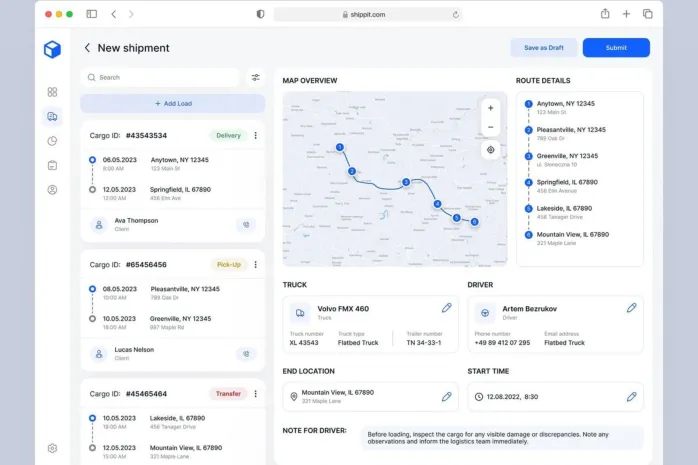
The ROI: What to Expect in 2026
Investing in a custom solution isn't just a tech upgrade; it’s a strategic financial move. On average, businesses that digitize their fleet operations see:
31% Increase in Vehicle Utilization: Get more deliveries done with the same number of vehicles.
18% Reduction in Route Planning Time: Free up your dispatchers to focus on high-level strategy rather than manual mapping.
Significant Insurance Premium Savings: Many North American insurers offer "telematics discounts" for fleets that prove a commitment to safety through software.
Conclusion:
As we look at the remainder of 2026, the divide between digital-first companies and legacy operators will only widen. The complexities of the North American market, from regulatory shifts to economic pressures, require a level of precision.
Fleet & route management software is the engine of modern commerce. It is the tool that allows you to promise speed to your customers, safety to your drivers, and profitability to your stakeholders.
At Softuvo, we are committed to helping North American businesses navigate this road. Our expertise in building bespoke, humanized, and data-driven solutions ensures that your fleet isn't just moving; it's evolving.